 |
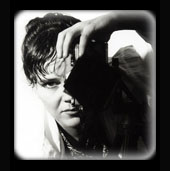
Sylvie Chadourne (aka SYL)
Photographer | Web Designer | Painter | Screenwriter |
Syl's photos technic.
All these
photographs were taken with a
reflex camera 24 X 36 mm . With the exception of my very first photographs, carried
out on negative film colour, I mainly used films for slides
colours from 100 to 400 asa according to needs of the subject.
The objective
is, in my opinion, the determining element with returned catch of sight.
The case can be of quality, if the objective is not it, it will be impossible
to take " a beautiful " photograph. The situation reverses will be on
the other hand much negotiable. The choice of the objective
is closely related to the subject which one wishes to photograph. I use a range of focal distances
going from the 24mm
(large angular) to the 500mm (teleobjective). My favourite objective is a zoom 70-210mm also
having a macro position. Very practical, it adapt to many subjects, covering
an optical range, it reduces also the weight of my photo bag! I make a point of specifying
that I does only very little Macro. It is rather what is called of Photographs brought closer,
i.e. I zoom à.fond (210mm) by aiming at subjects which find at short-haul of my
apparatus. I use same manner a teleobjective of 500mm with mirror. In short, I
am used for myself of teleobjectives not to photograph what is far but
to seize what is close, thus sublimating
dimensions and accentuating the details. These objectives, from their
nature (they " eat " the light), generally impose large opening of diaphragm, reducing
of this fact the depth
of field : a disadvantage
which appears to be an advantage for my
photographs bus making the background fuzzy, that emphasises the principal
subject by isolating it from the
bottom. The task is more difficult when it acts several elements having
to appear in a same framework. It is then
necessary to seek a plan of clearness making it possible to make the development
on the most interesting subjects while taking account of the harmony of
the forms in framing. In all the cases, I for a
long time chose the use of the tripod (in brought closer Photography), sometimes constraining but
ensuring the stability of the apparatus during release.
It is a rule
Photographs some that I transgress with wish: the
backlight. I like
contrasts violent ones caused by a
declining sun and luminous contours that it draws, such one will have
around matter. Park with the burns
of the retina: it is necessary to play of mischievousness when one presents
oneself vis-à-vis to sun. A sun visor fixed at
the end of optics or held with end of arm cures the veil of light that one meets in this case. Nevertheless,
the luminous rays striking the objective directly cause very aesthetic irisations
provided that one can exploit them. Moreover, these teleobjectives,
from the nature of their lenses, interpret sometimes beautiful way of glares of light being in
front of or behind (out x-ray) the subject concerned. Thus, of the drops
of rain shone upon transform into
geometrical figures illumining the photograph of a bucolic magic.
Let us come
now to the optical
filters. I had the
great chance that a friend, having forsaken his activity of photographer,
offers a whole panoply of filters to me: Polarising, Radial
zoom, Spangled, filter with facets, Gradation
colours. I was useful myself
about it only much later. He seemed to to me in effect which the filters
of colour for example could allow to transcend a sand texture grey, sad and dull but that
the resulting colour appeared often artificial and like plated on the subject. The
facet filter, which multiplies the
image, used in a conventional way appeared to me of a limited interest, doing
nothing but reproduce the central subject in the angles while making it
fuzzy of addition. It is by chance that I discovered
a way of using the filters. Not having a gate filters not adapted with the 500mm, I decided
to hold myself the filter in front of the objective and, the eye in the
sight, I realised that by positioning the filter
(colour in fact) slightly in skew, this one collected the rays luminous by the section and
a such prism acted, causing coloured brightness. I hastened to apply this
principle to the other accessories and I obtained finally interesting
images. The result of the use of the filters depends of course on the
adequacy on the selected subject. Employees advisedly, they
can transfigure a photograph a priori banal. However, the filter does
not make not all. It cannot explain
to him only the success of a stereotype. And like any thing, it is necessary
to know in using without misusing
it.
Some words
finally on my relation
with the technique. I began in photography at the 14 years age, within
the framework of an association where I learned the bases from the catch
of sight and of Black development and White
in laboratory. I took again a camera in hand only years later - to see Who
is Syl? - . Strong of my experiment
in Painting and Drawing, I have to approach the composition of the image
instinctively. I therefore did not neglect this chapter in the studies that I carried out then thanks
to the pounds treating of Photography. There is no universal receipt:
with each one its path. Personally, I need a scientist mixes artistic
intuition and technical knowledge. It is a delicate balance. I would nevertheless tend
to think that the technique is nothing different but a know-how in the absence of an artistic
sensitivity, but that the artistic direction must nourish technique to evolve/move and be explored
itself.

